How to stick to a budget (when the monthly number feels too far away)
Why a monthly target stops holding by mid-month, and eight evidence-informed steps to keep going, including what to do after a bad day.
Part of the series that starts with Why budgets fail: the feedback delay problem.
Try it for free on Google Play
Spendguin is our product, so we're not neutral. Spendguin is an Android budgeting app that shows what's left to spend today by reading purchase alerts from your bank and wallet apps. No bank login. Everything below works with a notebook or any other tool, too. 🐧
For the deeper research, see why budgets fail: the feedback delay problem.
Why a budget stops holding
Picture the third week of the month. Your plan said you'd spend a set amount. You've lost track of where you are, one expensive weekend has made the whole thing feel pointless, and checking means opening three apps. So you don't. That's not a character flaw. It's a design problem with three parts:
- Distance. A monthly number is abstract on a Tuesday afternoon. We tend to overweight the present against the future (see the pillar guide).
- Effort. A survey of 1,059 US adults found almost half of personal-finance-app users had stopped, with manual categorizing named as a burden (Lush, Meagher & Fontes, 2020).
- The verdict. In a survey of people who had stopped tracking, some found it uncomfortable; one said they "felt guilty every time I tracked an expense" (Epstein et al., 2016).
A budget set and then rarely looked at doesn't do much: in a 13-week test of 9,035 budgeting-app users, a weekly one-number budget and a category budget both left average spending unchanged versus a control group, and 84% looked at their budget five times or fewer (Irrational Labs). Budgeters in that test also spent more than their intended budget, around 1.3 to 1.4 times, according to the researchers' summary.
Eight steps that fit the research
1. Pick a number you can feel
Turn the monthly target into a daily one: spending money (income minus fixed bills and savings) divided by the days in the pay period. A daily number is closer to each choice, which fits the idea that monitoring progress helps goal attainment: a meta-analysis of 138 randomized trials (19,951 participants) found a small-to-moderate benefit (d = 0.40), larger when progress was recorded (Harkin et al., 2016). No study has compared a daily budget with a monthly one directly, so this is a reasonable design choice, not a proven one. The daily spending limit guide has a worked example.
2. Make the number realistic
If the target is fantasy, you'll fail by Thursday. Start from what you actually spent last month, not from what you wish you'd spent. (Our advice, not a study.)
3. Make capture nearly automatic
Every manual step is a chance to quit. Habit researcher Wendy Wood argues that friction strongly shapes whether a behavior repeats (APA interview). Use whatever captures purchases with the least effort for you, and keep manual entry for the gaps.
4. Look at the number at the moment of choice, with an if-then plan
An if-then plan, such as "if I'm about to pay for lunch out, then I check today's number first", is called an implementation intention. A meta-analysis of 94 tests found a medium-to-large effect on goal attainment (d = 0.65) (Gollwitzer & Sheeran, 2006). The studies weren't about budgeting, so treat it as a promising technique, not a promise.
5. Judge yourself by pace, not perfection
One expensive day isn't the story. The question is whether you're near pace.
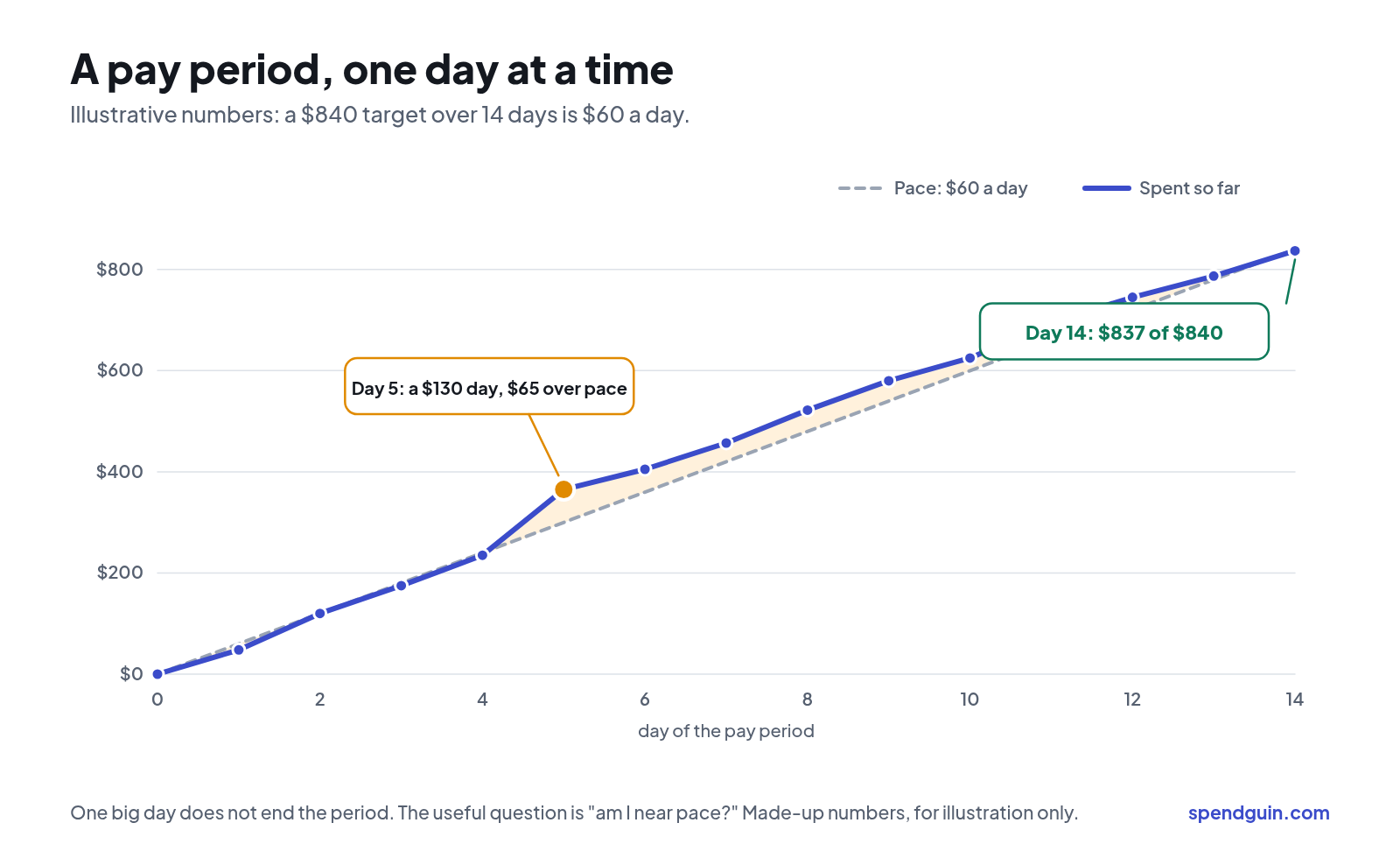 Figure 1. Illustrative numbers only: a $840 target over 14 days is $60 a day. A big day moves you off pace, and ordinary days bring you back.
A short window matters here. In a technical report on budget monitoring, precise feedback could raise end-of-period spending when money was left over, and the effect was weaker with rollovers and shorter budget windows (Ghosh & Huang, 2020). It isn't peer reviewed, and we haven't tested Spendguin's version. Still, it's a reason not to run one long window with a big pile of unspent money.
6. Have a plan for the day you blow it
You will have one. What you do next matters more than the day itself.
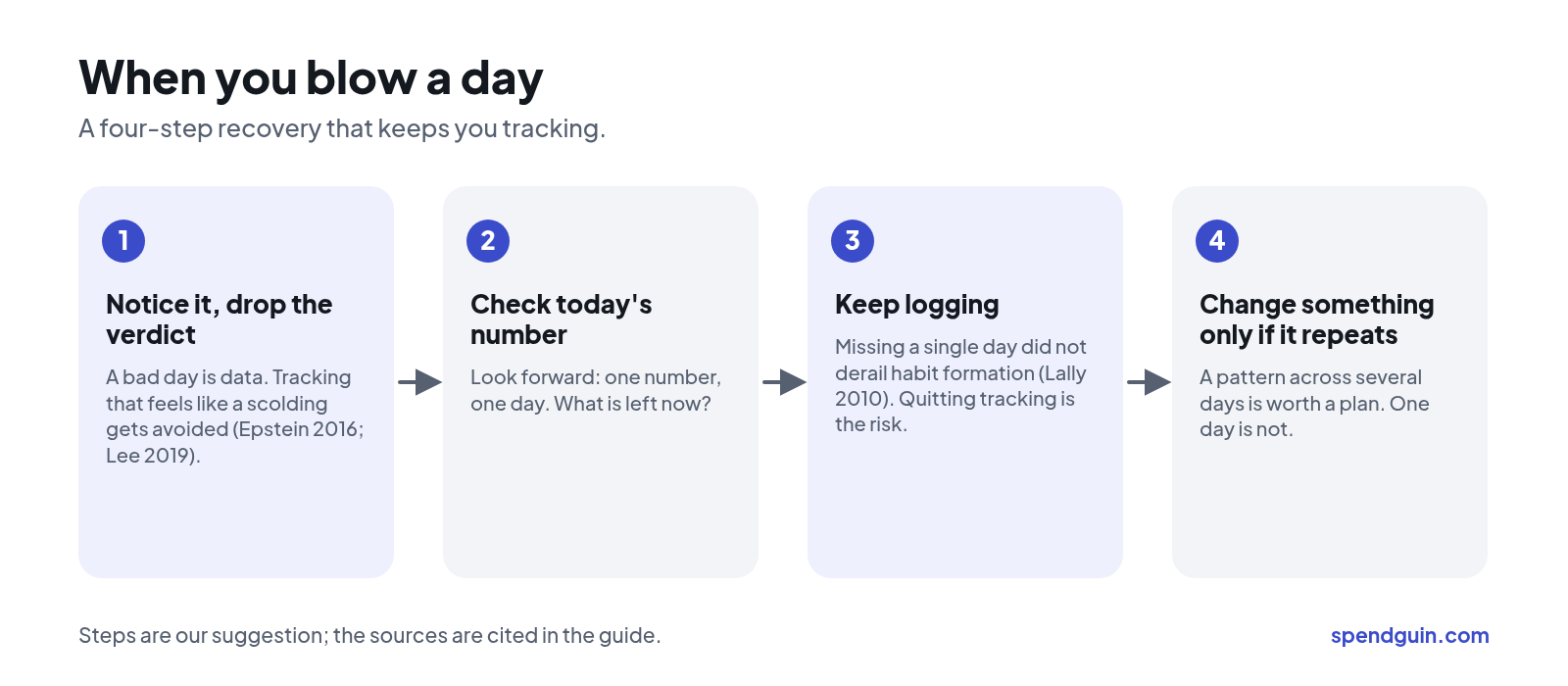 Figure 2. A recovery plan. The steps are our suggestion; the sources are cited in the text.
- Drop the verdict. People avoid numbers that feel like scoldings. In a bank-app study, people who got an overspending message checked their accounts less afterward (Lee, 2019, working paper).
- Keep logging. In the best-known habit-formation study, missing a single day did not derail the process (Lally et al., 2010).
- Change the plan only if it repeats.
7. Use a rhythm, not a ritual
Daily feedback builds the habit; weekly and pay-period looks are for planning.
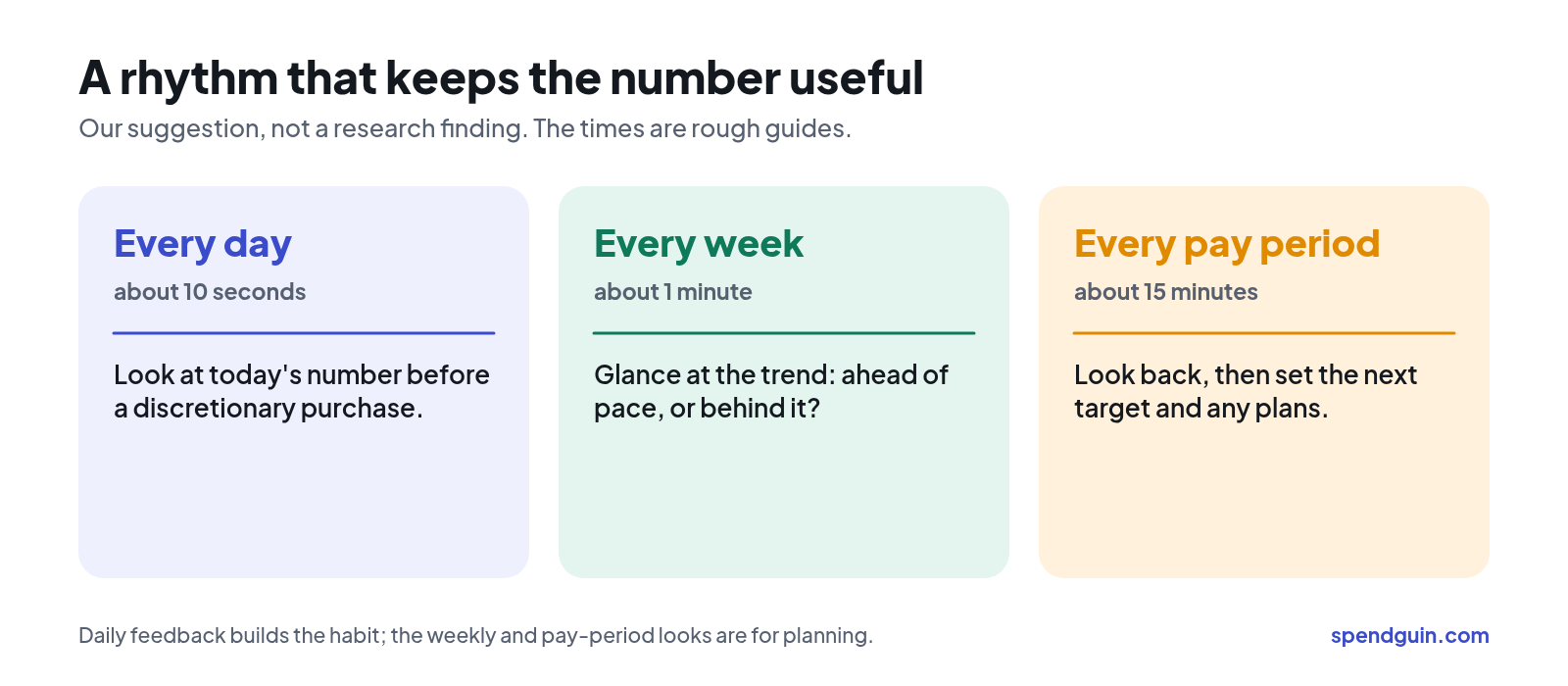 Figure 3. A rhythm that keeps the number useful. It's our suggestion, not a research finding, and the times are rough guides.
8. Give it two months
In one study of everyday behaviors, the median time to near-peak automaticity was 66 days, with a range from 18 to 254 (Lally et al., 2010). Treat the first two months as practice.
The two things a daily number can't do: cover surprises and save for you
A daily number helps with day-to-day pace. It doesn't build a cushion or pay for annual bills.
Plan for costs that aren't monthly. In a Chase account sample, monthly spending changed by more than 5% for everyone, and months with five paydays, tax bills and year-end shopping were named drivers (J.P. Morgan Chase Institute, 2015). In a Federal Reserve survey, 63% of US adults said they could cover a $400 emergency with cash or its equivalent (Federal Reserve, 2025). A simple method: list the costs that arrive once or twice a year (car registration, insurance, gifts, repairs), add them up, divide by the number of pay periods in a year (26 if paid every two weeks, 24 if twice a month, 12 if monthly) and set that amount aside each pay period before you work out your daily number. In Spendguin, spreading one big purchase over several pay periods is a Pro feature.
Automate the saving. "Pay yourself first" means the transfer happens on payday so willpower isn't involved. The best-known evidence is Save More Tomorrow, where employees committed in advance to put part of future raises into retirement savings; enrollees' average savings rate rose from 3.5% to 13.6% over 40 months (Thaler & Benartzi, 2004). Caveats: people chose to enroll, it wasn't randomized, and the US Department of Labor's CLEAR review rates the causal evidence as low.
Which budget method sticks? Four common ones compared
| Method | The idea | How often it gives feedback | Where it tends to break |
|---|---|---|---|
| 50/30/20 | Roughly 50% needs, 30% wants, 20% savings and debt (Warren & Tyagi, 2005) | Monthly, unless you add tracking | Percentages don't say what you can spend today |
| Zero-based | Give every dollar a job each period (Ramsey lists it as tip 1) | At setup and when you re-plan | Many categories to maintain; see the simple budget app guide |
| Envelope / cash | Fill an envelope per category and stop when it's empty | Immediate, since you can see it empty | Cash is inconvenient, and digital versions need upkeep |
| Pay-period daily number | Spending money divided by days in the period; check what's left today | Every purchase | Doesn't plan for non-monthly costs; untested head to head |
We found no study comparing which method people keep longest, so choose by the feedback you will actually look at. The daily number is the one closest to the research on timing in the pillar guide, and the real-time spending tracker guide explains how to tell whether a tool delivers it.
What about willpower, goals and accountability?
- Habits over willpower. A set of studies found that the benefits of self-control showed up through beneficial habits (Galla & Duckworth, 2015). Build the habit; don't count on grit every day.
- Specific goals. Reminders that named a specific savings goal raised savings by 16% in Peru, while generic reminders had no significant effect (Karlan et al., 2016). "Save for the trip" beats "save more".
- Accountability. Wendy Wood has said accountability has strong short-term effects but is harder to keep working over the long term (APA interview). Sharing a number with a partner can help; just keep it kind.
- A complete picture. In one field experiment, weekly goal feedback reduced credit-card spending only when it showed both ordinary and exceptional purchases, and the formal result was marginally significant (Huebner, Fleisch & Ilic, 2020). If your number leaves out half your spending, it's easy to distrust.
For changing one specific habit, see how to change your spending habits.
Where Spendguin fits, and where it doesn't
Spendguin is built around a daily number: you set one target for your pay period (monthly, twice a month, weekly, or every 2 weeks), it turns that into a daily amount, and it picks up purchases from your Google Wallet and bank-app notifications, so there's nothing to type and no bank login. Go over today and it affects the days after in the same pay period, so the period still aims at your target. A new period starts fresh, so leftover money doesn't roll into it (what's left today; going over today).
It's Android only, needs notification access, and can only see what alerts show; anything missed can be added by hand. Alerts on every purchase, when you're getting close to today's amount, and when you're over it are free. Partner sharing is free. Pro is a paid subscription after a trial, and adds spreading big purchases over pay periods, a day-before heads-up on recurring charges, a nightly recap and Monday week-ahead, choices for what to do with an overspend when a pay period ends (spread it or carry it to the first day), and older history (Free shows the last 30 days). Pro features show as locked on Free. It tracks spending you've already made; it doesn't move money or give financial advice. It hasn't been tested in a controlled trial, so we can't promise it will help you stick to a budget. We built it on the ideas above.
Sources
- Harkin, B., et al. (2016). Does monitoring goal progress promote goal attainment? A meta-analysis. Psychological Bulletin, 142(2), 198-229. Accessed .
- Gollwitzer, P. M., & Sheeran, P. (2006). Implementation intentions and goal achievement: A meta-analysis of effects and processes. Advances in Experimental Social Psychology, 38, 69-119. Accessed .
- Lally, P., et al. (2010). How are habits formed: Modelling habit formation in the real world. European Journal of Social Psychology, 40(6), 998-1009. Accessed .
- Epstein, D. A., et al. (2016). Beyond abandonment to next steps. CHI 2016 (survey n = 193). Accessed .
- Lee, S. K. (2019). Fintech nudges: Overspending messages and personal finance management. SSRN working paper (not peer reviewed). Accessed .
- Ghosh, A. P., & Huang, L. (2020). Dynamic budget monitoring. Think Forward Initiative technical report (not peer reviewed). Accessed .
- Irrational Labs. Budgeting: What our research uncovered (13-week experiment, N = 9,035). Accessed .
- Huebner, J., Fleisch, E., & Ilic, A. (2020). Assisting mental accounting using smartphones. Computers in Human Behavior, 113, 106504. Accessed .
- Karlan, D., McConnell, M., Mullainathan, S., & Zinman, J. (2016). Getting to the top of mind: How reminders increase saving. Management Science, 62(12), 3393-3411. Accessed .
- Galla, B. M., & Duckworth, A. L. (2015). More than resisting temptation: Beneficial habits mediate the relationship between self-control and positive life outcomes. JPSP, 109(3), 508-525. Accessed .
- Wood, W. Interview: How the science of habits can help us keep our New Year's resolutions. APA podcast (secondary source). Accessed .
- Lush, M., Meagher, K., & Fontes, A. (2020). Personal financial management tools. Consumer Interests Annual, 66 (survey, n = 1,059). Accessed .
- Spendguin help center: What's left today; Going over today. Accessed .
- J.P. Morgan Chase Institute (2015). Weathering Volatility: Big data on the financial ups and downs of U.S. individuals (Farrell & Greig). Accessed .
- Board of Governors of the Federal Reserve System (2025). Economic Well-Being of U.S. Households in 2024, Savings and Investments (SHED). Accessed .
- Warren, E., & Tyagi, A. W. (2005). All Your Worth: The Ultimate Lifetime Money Plan. Free Press. Accessed .
- Thaler, R. H., & Benartzi, S. (2004). Save More Tomorrow. Journal of Political Economy, 112(S1), S164-S187. (Not randomized; rated low causal quality by the US Department of Labor CLEAR.) Accessed .
- Ramsey Solutions. How to Stick to a Budget (describes zero-based budgeting). Publisher guidance, not research. Accessed .
FAQ
Why can't I stick to a budget?
Common reasons are that the monthly number feels far away, tracking takes too much effort, and one bad day feels like failure. Surveys of people who stopped tracking point to the effort and, for some, the discomfort of seeing the numbers. The fix is usually a smaller feedback loop and an easier system, not more willpower.
How long does it take to stick to a budget?
Plan on about two months. In one study of everyday behaviors the median time to near-peak automaticity was 66 days, with a range of 18 to 254 days, and missing a single day did not derail the process.
What should I do after I overspend?
Treat it as data, look at the next number, keep logging, and only change the plan if the pattern repeats. Quitting tracking is the bigger risk than one bad day.
Does telling someone about my budget help?
A little, for a while. Habit researcher Wendy Wood has said accountability has strong short-term effects but is harder to keep working over the long term. Sharing a number with a partner can help, as long as it stays kind.
Is a daily budget better than a monthly one?
Not proven. A daily number gives feedback closer to each choice, which fits the research on timing and monitoring, but no study has compared daily and monthly budgets head to head. One technical report suggests short windows with carry-forward reduce the tendency to spend leftover money late in a period.
What is the $27.40 rule?
A social-media rule of thumb: set aside $27.40 a day to reach about $10,000 in a year (27.40 x 365 = $10,001). It is arithmetic, not a researched method, and it assumes you have $27.40 a day of room in your budget.
What is the 50/30/20 rule?
A split of take-home pay into roughly 50% needs, 30% wants and 20% savings or debt repayment, from Elizabeth Warren and Amelia Warren Tyagi's 2005 book All Your Worth. It is a starting framework; it does not tell you what you can spend today, and some households' fixed costs exceed 50%.
How do I stick to a budget when my income is irregular?
Budget per pay period or per month from what you actually received, not what you hope to receive, and keep a cushion for light months. J.P. Morgan Chase Institute data shows monthly income swings are common across income levels. Basing the plan on a lower-than-average month is common practical advice, not a research finding.
Spendguin shows what’s left to spend today by reading the purchase alerts you already get. No bank login.